How to Decide Between Asphalt Repair, Resurfacing, or Replacement
Short answer: Repair asphalt when damage is minor and localized, resurface when the surface is worn, but the base is still structurally sound, and replace when the pavement has widespread failure or underlying issues.
Choosing the right option comes down to the condition of your pavement, the extent of the damage, and your long-term goals for the property.
Asphalt Repair is Best for Localized Damage
If your pavement is mostly in good condition but has isolated issues, repair is often the most practical solution.
Repairs are typically used to address:
- Small cracks or early-stage deterioration
- Isolated potholes
- Limited surface damage
This approach helps extend the life of your asphalt without the cost of a larger project.
However, repair only works when the damage is not widespread. If you find yourself fixing the same areas repeatedly or seeing new issues appear quickly, it may be a sign that a more comprehensive solution is needed.
Resurfacing Restores Worn Pavement Without Replacement
If your pavement shows signs of wear across the surface but still has a stable foundation, resurfacing can be the right next step.
Resurfacing involves adding a new layer of asphalt over the existing surface. It is typically used when:
- The surface is cracked or worn, but the base is intact
- Drainage is still functioning properly
- Structural integrity has not been compromised
This option improves appearance, restores smoothness, and extends pavement life at a lower cost than full replacement.
Resurfacing is not effective if the underlying structure has already failed. In those cases, issues will return through the new surface.
Replacement is Necessary When Structural Failure is Present
When damage extends beyond the surface, replacement is often the only long-term solution.
Full replacement is typically required when:
- Cracking is widespread or severe
- Potholes are recurring across large areas
- Drainage problems are causing ongoing damage
- The base layer has deteriorated
The Condition of Your Pavement Should Guide the Decision
The most effective way to choose between repair, resurfacing, and replacement is to evaluate the overall condition of your asphalt.
Look at:
- How much pavement is affected
- Whether damage is isolated or widespread
- How often are problems recurring
- Whether the base is still stable
If most of your pavement is still performing well, targeted repairs may be enough. If the surface is aging but structurally sound, resurfacing can extend its life. If the issues run deeper, replacement is a more reliable option.
Budget Matters, but Long-term Value Matters More
It is natural to focus on upfront cost when deciding how to move forward.
Repairs are the least expensive in the short term. Resurfacing falls in the middle. Replacement requires the largest investment.
The key is to align your decision with how long you need the pavement to perform.
If you choose a lower-cost option when the pavement requires more extensive work, you may end up paying more in the long run through repeated repairs and ongoing disruptions.
A well-timed investment can reduce long-term costs and improve reliability.
Timing Your Decision Can Prevent Bigger Problems
Waiting too long to act often limits your options.
Minor issues can usually be resolved with simple repairs. As damage spreads, resurfacing becomes the next step. Once the structure is affected, replacement becomes necessary.
Addressing problems early gives you more flexibility and helps you avoid more expensive solutions down the road.
The Right Solution Depends on Your Goals
There is no one-size-fits-all answer to asphalt maintenance.
Repair, resurfacing, and replacement all serve a purpose. The right choice depends on your pavement condition, your budget, and how long you expect the surface to perform.
When you match the solution, you protect your investment, reduce risk, and keep your property functioning as it should be.
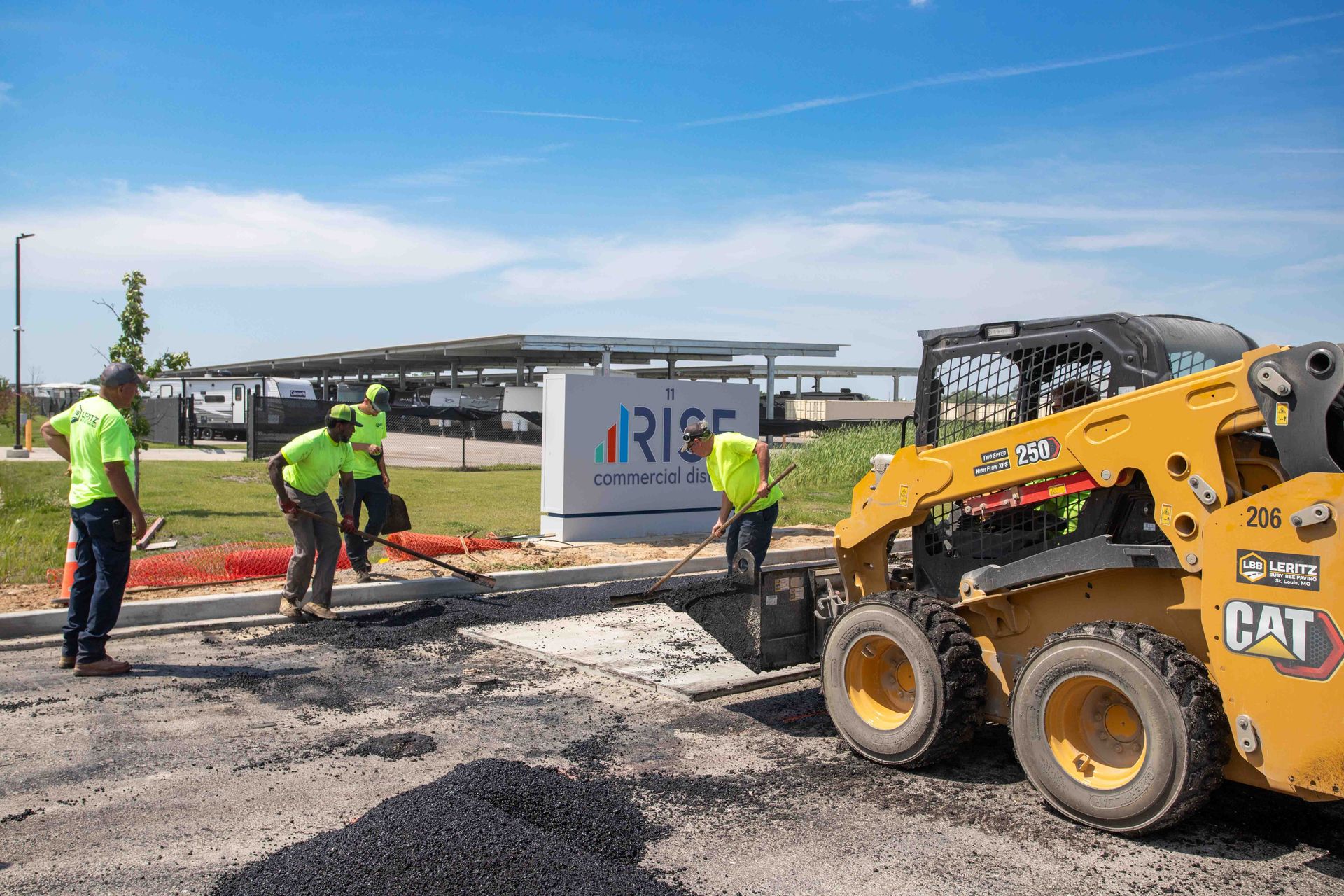
Choosing the Right Asphalt Solution Starts with a Clear Plan
Making the right decision between repair, resurfacing, and replacement does not require guesswork. It comes from understanding your pavement condition and taking a consistent, practical approach to maintenance and planning.
Proper evaluation, combined with regular inspections, gives commercial property owners and managers greater control over pavement performance, budgeting, and long-term costs.
Well-maintained asphalt reflects safety, professionalism, and long-term value. The right decision at the right time can extend pavement life, reduce disruptions, and prevent unnecessary expenses.
Our Leritz Busy Bee team of asphalt paving experts considers all of these factors when evaluating your property and recommending the right solution.
We bring decades of experience working across Greater St. Louis on commercial paving projects of all sizes, with the expertise and execution needed to guide you from assessment to completion with confidence.
(Please note that we are a commercial asphalt paver and do not do residential projects.)
Give the
Leritz Busy Bee team a
call today to discuss your pavement needs and find the right solution for your property.